Weligama
Written by the Sithiyam Travel team in Colombo
Weligama 2026 — Sri Lanka's top spot to learn to surf. Beginner-friendly waves, fresh seafood, and laid-back guesthouses on the south coast.
 Sri Lanka
Overview
What makes this place worth the journey.
Weligama means "sandy village" in Sinhala, which undersells it. The bay was a working port under the Sinhalese kings and again through the colonial cinnamon trade, centuries before anyone arrived carrying a surfboard.
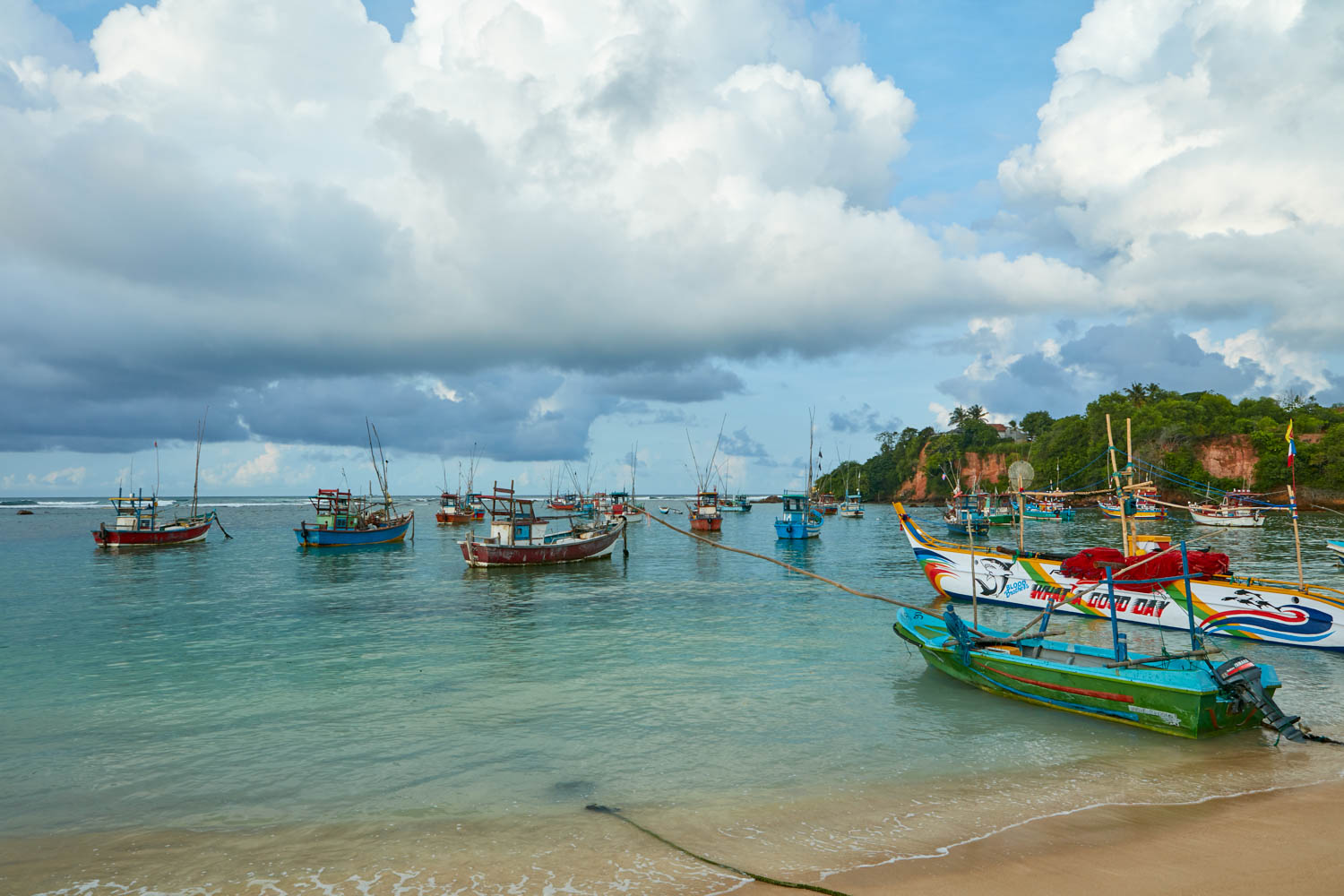
It is still a fishing town. Boats go out before light from the eastern end of the bay and the catch is sold on the road while the first surf lessons are getting started at the other end. That is the character of the place, and it is worth knowing before you book: not a resort strip, and not a village pretending nothing has changed.
What changed is the last ten years. Cafés, yoga rooms, hostels, a handful of small design hotels and a Marriott have arrived along the same coast road, and Weligama has become the town people base themselves in while they learn. It sits between Mirissa and Ahangama, ten and fifteen minutes either side, so a group that wants different things out of the week does not have to split up over where to sleep.
How many nights, and where it fits
Counted off the routes we actually sell, not guessed.
Give it three or four days if you have come to learn, and a week if you want one base for the whole south coast. We have not published a figure of our own for Weligama and we are not going to guess one. What we can tell you is the shape of the day, because here the wind writes the timetable and not the opening hours.
06:30 — the boats come in — The catch is sold on the road at the eastern end of the bay while nobody else is up. This is the town being a town.
07:00 to 10:00 — the water, and this is not optional — Lessons and the better surf are early. After ten the onshore wind gets up and pulls the shape out of the wave, and the break fills with learners.
10:30 — breakfast, late and long — The café strip exists for exactly this hour. It is the busiest the town gets.
Noon to 15:30 — the flat middle — Too hot and too windy for the bay. This is when people ride out to Galle, Koggala or Mirissa, which is why the day-trip block matters more here than the things-to-do one.
16:00 — back in, or west — A second session as the wind drops, or fifteen minutes to Ahangama for the reef.
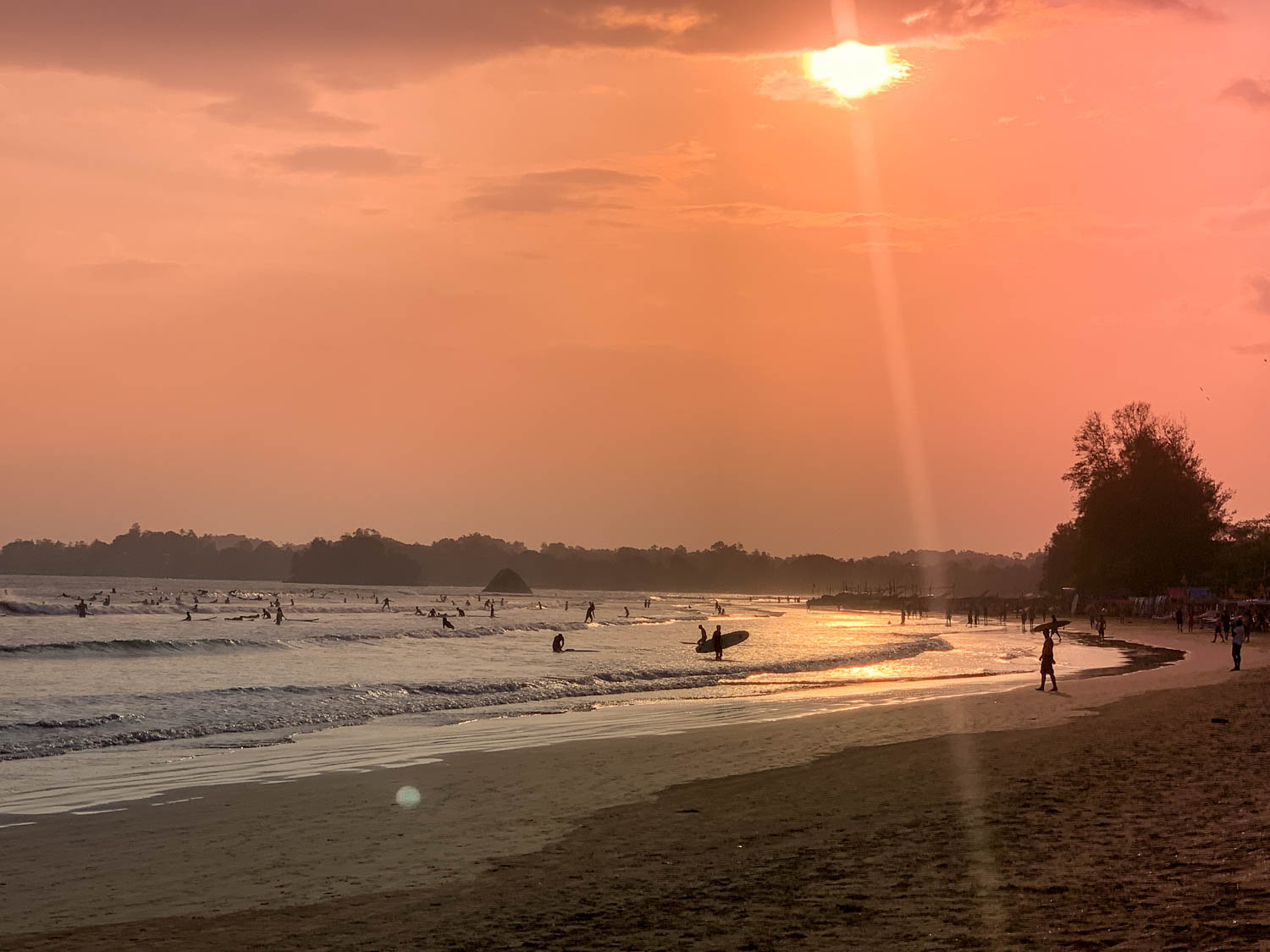
18:15 — Taprobane goes black against the sun — Sunset is the photograph, and it is over quickly this close to the equator.
20:00 — dinner, and it finishes early — Beach bars and open-air kitchens. A DJ at the weekend. Everyone surfing tomorrow is in bed by eleven.
What a day costs
A hostel bed — $30–60
A mid-range room — $80–150
The good rooms — $200+
Rice and curry, in town — under LKR 800
A surf lesson, board in — $20–25
Café breakfast — not priced yet
Tuk-tuk, town hops — not priced yet
Five of seven lines are ours and dated. We are not adding the two we have not measured to give you a tidy daily total — every site that quotes one has guessed it. Ask us and we price your actual dates.
Is it worth basing here?
Some towns are a lunch stop, not a base. We say which.
Yes — if you are here to learn to surf, or if you want one base for the south coast and would rather not change hotel every second night.
Galle is forty-five minutes, Mirissa is ten, the reef breaks are fifteen and the whale boats leave from down the road. You can fill a week out of one room, which is not true of most towns on this coast.
Skip it if you want an empty beach. This is a working town with a busy bay, and the bay is busy because it is good.
Skip it too if you already surf well. The main break will bore you inside a day — base yourself at Midigama or Ahangama and come to Weligama to eat.
Skip it if you have come for the cultural triangle. Sigiriya and Anuradhapura are a long day away and this is the wrong end of the island for them.
What to do
The place itself, then everything around it opens up.

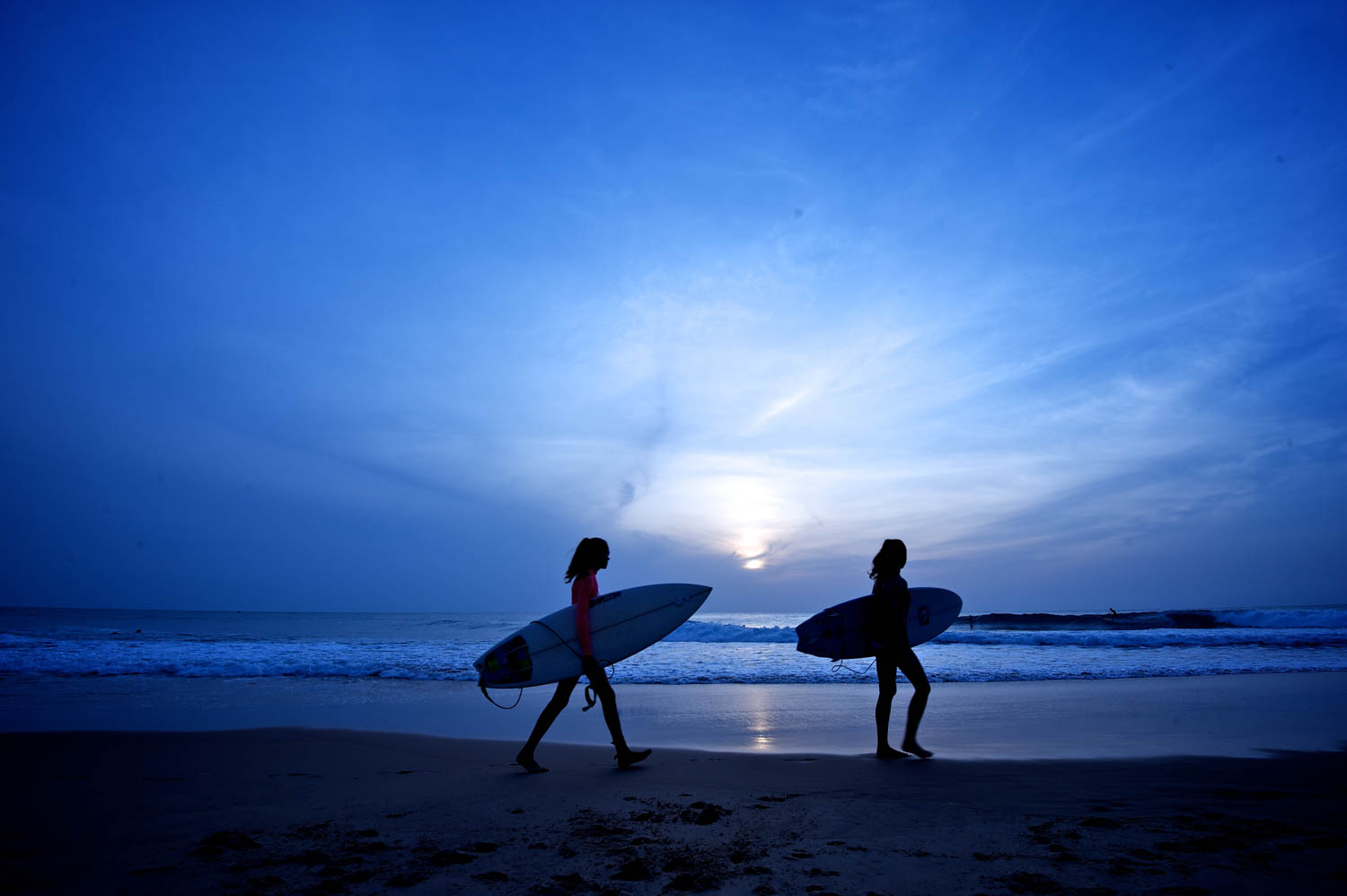
A surf lesson — 90 min, around $20–25 with the board and the briefing on the sand. Freedom, Lucky's, Kima and Surf 'n Lanka are the schools people come back to. Book one rather than taking an offer on the beach: the town's name has pulled informal operators in alongside the established ones, and it is first-timers who get caught by the difference.
Taprobane at sunset — The islet everybody photographs, from the eastern end of the bay. Read why it matters in the next block before you go.
Kushtarajagala — An 8th-century figure cut into a standing rock in the middle of Weligama town, one of the oldest Mahayana Buddhist carvings in Sri Lanka. A two-minute stop that almost nobody makes.
Sunrise yoga — Ceylon Sliders and Hangtime both run morning sessions and both take people who are not staying with them.
Ayurveda — There is a residential retreat in town, in the same November-to-April window as the surf. Worth knowing before you plan around it: a real treatment programme is a fortnight in one place, not something you add to a touring itinerary.
Cycling inland — Half a day through paddy, villages and cinnamon — the crop this bay was shipping three hundred years ago.
After dark it stays casual and finishes earlier than you would expect. Ceylon Sliders pours rooftop drinks above its own café and surf shop, W15 is the beachfront one with live DJs at weekends, and Marshmallow Café in Ahangama collects everyone who has been working off a laptop all day.
Weligama works as a base because the coast road does the work. Everything here is out and back inside a day, and the flat windy middle of the day is when to go.
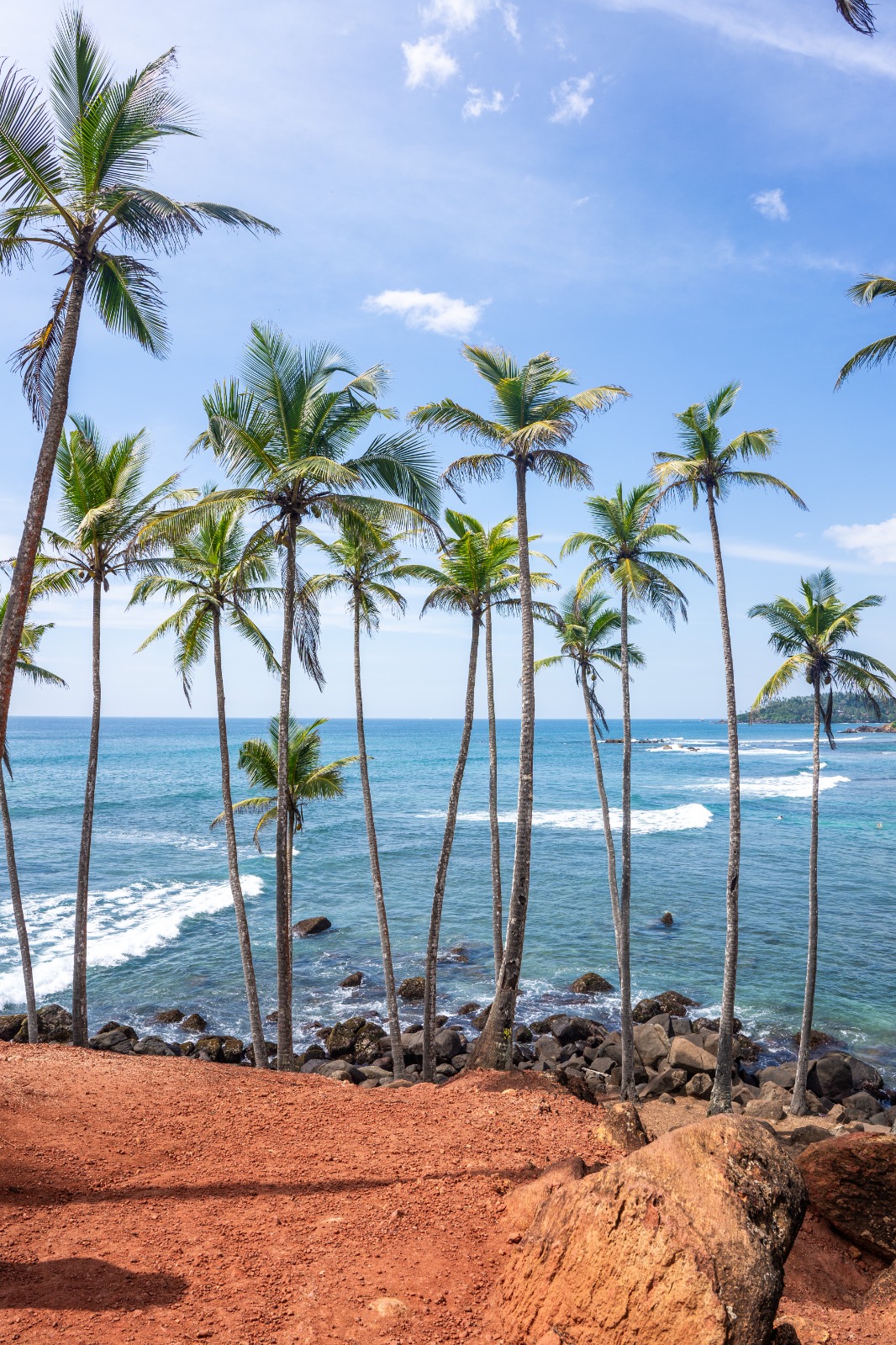
Mirissa — 10 min. The whale boats, the beach bars and the climb up Coconut Tree Hill. Busier than here, and it knows it.
Koggala — 25 min west. The working stilt-fishing stretch and the lagoon behind it. Dawn or dusk or not at all.
Secret Beach, Mirissa — 15 min. A cove behind the headland with clear water. Less secret every year, so go early or not at all.
Galle Fort — 45 min. Dutch ramparts with a working town still living inside them, and the lighthouse up on the wall. Our guide to every UNESCO site in Sri Lanka covers it properly.
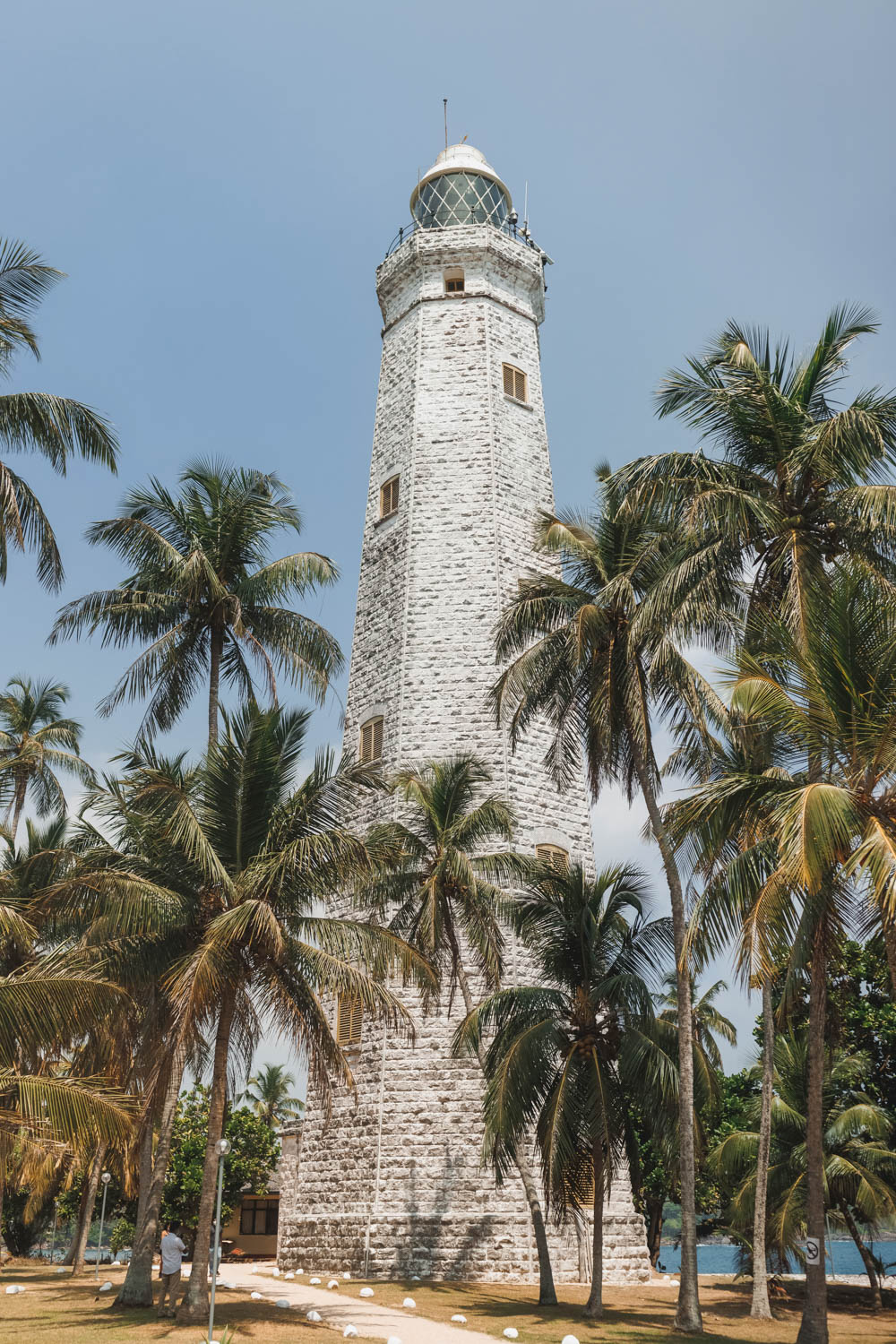
Dondra Head — 1 hr. The southernmost point of the island, marked by the tallest lighthouse on it.
Udawalawe — 2.5 hrs. The largest elephant population in the country. Leave before dawn to make the morning drive worth the road.
Kosgoda — 1 hr 15 min. Turtle hatcheries, up the west coast.
Pinnawala — 4 hrs each way, so not a day trip from here whatever you are told at the desk. Welfare standards there are argued over; read about it and decide for yourself.
Why come here
The reasons travellers book around this place.
The bay is built for beginners, and that is geography rather than marketing
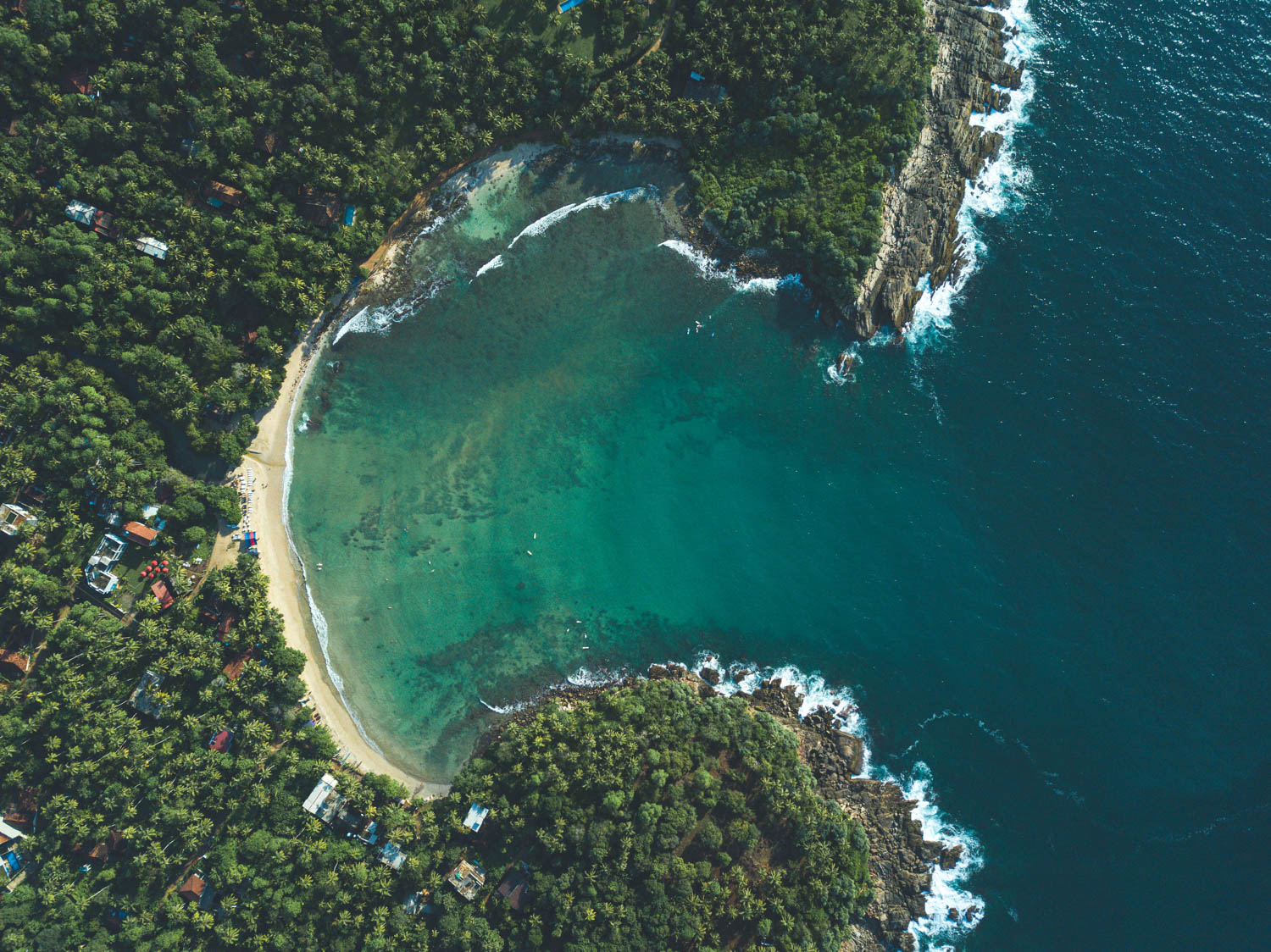
Weligama Bay is 3.2 km across and the bottom is sand. No reef, no rock. Headlands at both ends take the power out of the swell before it arrives, so the waves come in long and slow and they keep coming. A first-timer who falls lands on sand, in water they can stand up in, and that one fact is why this bay and not another one is where Sri Lanka learns to surf.
The water sits between 27 and 29°C all year, so nobody wears a wetsuit. Guests staying in Mirissa travel here for their lessons rather than use their own beach, because Mirissa has no comparable sand-bottomed break. That is the measure of it.
The stilt fishermen, and what you are actually looking at
Stilt fishing — ritipanna — is not ancient. It began after the Second World War, when troop numbers on the south coast and heavy fishing left food short and the good spots crowded. Men went out to the water nobody else could reach, standing first on the wreckage of capsized boats and downed aircraft, later on poles driven into the reef. Sitting still above the surface throws no shadow to scare the fish, and one man on a pole can work a patch of shallow reef no boat can get to. The rig is a pole three to four metres long, set half a metre to a metre into the coral, with a crossbar lashed across it to sit on.
Now the part to know before you pay for a photograph. Since the 2004 tsunami, and with the stocks down, this has stopped being how most of these men make a living. A good deal of what a visitor sees today is posed, at the hours the light is good, for tips. That is not a scam and it is not nothing — it is a real craft, invented on this coast inside living memory, kept visible by the people who inherited it. But you are paying to see it rather than catching it happening, and you should know which one you are buying. Agree the price first. The working stretch runs west of here, around Koggala and Kathaluwa.
Taprobane
A Frenchman calling himself the Count de Mauny Talvande saw the islet off the eastern end of the bay around 1925, bought it, built a villa on the rock and planted the whole island as a garden. In 1952 the American writer Paul Bowles bought it, and finished his novel The Spider's House there in 1955 before selling up in 1957. It is a private house today and you cannot set foot on it unless you have taken the whole island. From the beach it is just the thing everyone photographs at sunset — and nobody standing next to you will know a word of that.
Weligama, Ahangama or Midigama?
Compare — Weligama | Ahangama | Midigama
The wave — Sand bottom, long and slow. Where you learn. | Reef. Kabalana barrels. For people who can already surf. | Reef. Rams Right, one of the most consistent waves in the country.
Who it suits — First-timers, mixed-ability groups, anyone who wants everything walkable. | Confident surfers, and people who care what the room looks like. | Surfers who want the break and nothing else.
The evening — Beach bars and open-air kitchens, over by eleven. | Quieter, better designed, the laptop crowd. | Almost nothing, and that is the point of it.
Rooms — Hostel to clifftop, the full spread. | Boutique-heavy, thinner at the cheap end. | Small and simple.
Walkable? — Yes — schools, cafés and beds inside one walk. | Mostly. Spread along the road. | Yes, but there is less to walk to.
Short answer: learn in Weligama, sleep in Ahangama if you already surf and want a nicer room, and only base at Midigama if the reef is the entire reason you came. Staying in one and riding to the others takes fifteen minutes and costs the price of a tuk-tuk, so this is a smaller decision than it feels like.
Hiraz's take
Getting here
From Colombo airport (CMB), three good ways down the coast.
From wherever you actually are, not just from Colombo.
Car from Colombo — 2.5 hrs on the Southern Expressway (E01). The fastest way in and the only sensible one with luggage or a board.
Train from Colombo — 2 hrs 40 min on the coastal line from Colombo Fort, roughly four services a day, running along the water for most of it. Buy second class; third fills up. Check the day's departures rather than a printed timetable.
Bus — Frequent from Colombo Fort, Galle and Matara, and the cheapest way to arrive. Slow, and there is nowhere to put a surfboard.
From Galle — 45 min straight down the coast road, which is also the easiest day trip in the other direction.
From the hill country — Ella and Kandy come down by car or by train through Colombo. We have not timed either ourselves and will not guess. Ask us and we will.
Once you're there
How to move around once you have arrived.
Weligama, Midigama and Ahangama sit in a line along one coast road and almost everything is on it, so getting around here is a smaller problem than it looks on a map.
On foot — The bay is walkable end to end. Most guesthouses, surf schools and cafés sit inside that walk and plenty of people never use anything else all week.
Tuk-tuk — The default for anything longer. Everywhere, and cheap for short hops between the towns. Agree the price before you get in; that is expected here, not rude.
Scooter — The cheapest way to move between the three surf towns and out to Mirissa. You need a Sri Lankan permit to ride legally and the hire shop will tell you how to get one. Do not skip it.
Coastal train — Stops at Weligama Station. Worth it for a day in Galle without arranging a driver, and it is a better ride than the road.
Where to stay
Close in for the atmosphere, further out for the quiet.
Where you sleep decides the week here. On the bay you are inside walking distance of the surf schools and the cafés, and also inside earshot of them. Ahangama, fifteen minutes west, is quieter and better designed. Midigama is for people who want the reef break and little else. The bands below are a guide; we price the real rooms to your dates.
Budget ($30–60)
- Hangtime Hostel — Rooftop yoga, a café and a surf crowd. The sociable one, which is the same thing as the loud one.
- Beatroot Hostel — Close to the beach and easier going.
- Mudra Hostel — Smaller and calmer than Hangtime.
Mid-range ($80–150)
- Outpost Beachfront Weligama — Thirty metres off the bay and built for people working while they travel: desks, connection, a co-living crowd rather than a holiday one.
- W15 Ahangama — Garden suites fifteen minutes west, for the quieter end of the week.
- Ceylon Sliders — A surf hotel with its own rooftop bar and café underneath it.
Luxury ($200+)
- Cascara Weligama — Fifteen rooms, several with a plunge pool. Quiet luxury without the resort scale.
- Weligama Bay Marriott Resort & Spa — The large one on the bay, infinity pools, and the right answer if you want a resort rather than a house.
- Cape Weligama — Relais & Châteaux on the clifftop, and the most expensive bed on this stretch of coast.
Where to eat
Cafés, local kitchens, and a few worth the drive.
Two kinds of place here: the cafés that grew up around the surf, and the kitchens that were always here. A rice and curry in a local kitchen in town is under LKR 800.
Meewitha Cool Spot — Rice and curry, the local one, and the reason the line above has a number in it.
Nomad Café — Smoothie bowls, salads and vegan plates. The post-yoga room, for better or worse.
Haus 35 — One woman cooks it and serves it herself. Small, and worth the wait that implies.
Moochies — Breakfast and brunch, usually full, which tells you what you need to know.
Layback Rooftop — On a roof in the middle of town, which is rarer here than it sounds.
W15 Weligama — The dressed-up dinner. Beachfront, cocktails, and worth booking.
Ceylon Sliders does the coffee and burgers with the surf in front of it, and Spaghetti & Co in Ahangama is for the night you have had enough rice.
Two kinds of place here: the cafés that grew up around the surf, and the kitchens that were always here. A rice and curry in a local kitchen in town is under LKR 800.
Meewitha Cool Spot — Rice and curry, the local one, and the reason the line above has a number in it.
Nomad Café — Smoothie bowls, salads and vegan plates. The post-yoga room, for better or worse.
Haus 35 — One woman cooks it and serves it herself. Small, and worth the wait that implies.
Moochies — Breakfast and brunch, usually full, which tells you what you need to know.
Layback Rooftop — On a roof in the middle of town, which is rarer here than it sounds.
W15 Weligama — The dressed-up dinner. Beachfront, cocktails, and worth booking.
Ceylon Sliders does the coffee and burgers with the surf in front of it, and Spaghetti & Co in Ahangama is for the night you have had enough rice.
When to go
The dry, bright window and the months to sit out.
- November to April — The southwest monsoon has pulled back, the swell cleans up into the long slow rollers this bay is known for, and December to March is the driest of it. Also the busiest and the dearest.
- Morning, 7 to 10 — True every day of the year. The wind gets up later and pulls the shape out of the wave, and by afternoon in season the break is full of learners.
- May to September — Onshore monsoon wind blows the surf out and makes it inconsistent. Rain is more frequent but usually a squall rather than a lost day. Emptier, cheaper, and the stilt fishing, Taprobane and the Ayurveda are all untouched by it.
- Avoid October and early November if you only get one shot — The first inter-monsoon carries the heaviest single-storm risk of the year on this coast.
Read our month-by-month guide to the best time to visit Sri Lanka.
What it costs
Rough, honest per-person guides — we price the real thing to your dates.
Travel tips
The small things that make the difference here.
Book the surf school before you arrive — Informal operators have followed the town's name. Board quality and teaching vary a lot at that end, and it is first-timers who get caught by it.
Take the big board on day one — Longer and thicker floats better and forgives more. Move down in size later, never on the first morning.
Learn the right of way — The surfer nearest the breaking peak has the wave. Dropping in on somebody is how arguments start, and this bay is crowded.
Reef-safe sunscreen, and more water than you think — Hours on a reflective surface. You will not feel the burn until the evening.
Agree the tuk-tuk price before you get in — Expected here, and not rude.
"It is closed today" is not true — The country-wide routine where a helpful stranger tells you the place you are heading for is shut, and offers somewhere better, works on this coast too.
Assume cash — Cards are fine in the cafés and the hotels. The local kitchens, the tuk-tuks and the beach are not.
Book the surf school before you arrive — Informal operators have followed the town's name. Board quality and teaching vary a lot at that end, and it is first-timers who get caught by it.
Take the big board on day one — Longer and thicker floats better and forgives more. Move down in size later, never on the first morning.
Learn the right of way — The surfer nearest the breaking peak has the wave. Dropping in on somebody is how arguments start, and this bay is crowded.
Reef-safe sunscreen, and more water than you think — Hours on a reflective surface. You will not feel the burn until the evening.
Agree the tuk-tuk price before you get in — Expected here, and not rude.
"It is closed today" is not true — The country-wide routine where a helpful stranger tells you the place you are heading for is shut, and offers somewhere better, works on this coast too.
Assume cash — Cards are fine in the cafés and the hotels. The local kitchens, the tuk-tuks and the beach are not.
In frames
A gallery of the destination.
-DroneExteriors-15.jpeg)

Common questions
Everything worth knowing before you go.
Is Weligama good for beginners?
It is the best beginner bay in Sri Lanka. Sand bottom, no reef, and headlands that take the power out of the swell before it reaches you.
How much is a surf lesson?
Around $20–25 for ninety minutes to two hours, board included. Book a named school rather than taking an offer on the sand.
Do I need a wetsuit?
No. The water is 27–29°C all year round.
When should I come?
November to April for the surf and the weather. May to September still works for everything except the surf.
Weligama or Ahangama?
Weligama if you are learning: bigger, cheaper, and the beginner break is directly in front of you. Ahangama if you already surf, or if you want a quieter and better-looking room.
Can you swim here?
Yes. Sheltered, shallow and sand-bottomed, which is what makes it safe as well as easy.
Are the stilt fishermen real?
The craft is real and it was invented on this coast after the Second World War. Most of what a visitor sees today is posed for tips rather than a working catch. Pay if you want the photograph, and know what you are paying for.
How do I get there from the airport?
Two and a half hours by road on the expressway, or two hours forty on the coastal train from Colombo Fort.
How many nights should I give it?
Three or four to learn, a week if you want one base for the south coast. We have not published a figure of our own and we are not going to guess one.
Sources and checked
August 31, 2026
Every fact on this page comes from our own Weligama knowledge file or from a named source below. Prices are indicative; we price the real rooms and the real transfers to your dates.
The bay — 3.2 km across, sand bottom, water 27–29°C, most consistent November to April: independent surf research, corroborated by our own file.
Stilt fishing — the post-war origin, the pole rig, and the shift to posed photography after the 2004 tsunami: multiple independent published accounts.
Taprobane Island — de Mauny Talvande from around 1925; Paul Bowles 1952 to 1957, completing The Spider's House there in 1955.
Seasons — the southwest monsoon pattern on the wet-zone south coast, and the October inter-monsoon storm risk.
The train — 2 hrs 40 min to 3 hrs from Colombo Fort, roughly four services a day. Times change, so check on the day.
Changed on 31 August 2026 — best months corrected from December–April to November–April, because the surf window opens a month before the driest weather does. Bay width corrected from 2 km to 3.2 km. Two claims from our own knowledge file were dropped rather than published, having failed an independent check: that the Taprobane villa is octagonal, and that the island can be reached on foot at low tide.
Something here wrong, or out of date? Tell us at traveldesk@sithiyam.com and we will fix it, and log it here.
Make it yours.
Tell us what pulls at you and we'll thread this journey into one private itinerary — sent back on a live link within 24 hours.